
Funny Exchange Responsible Gaming Guide
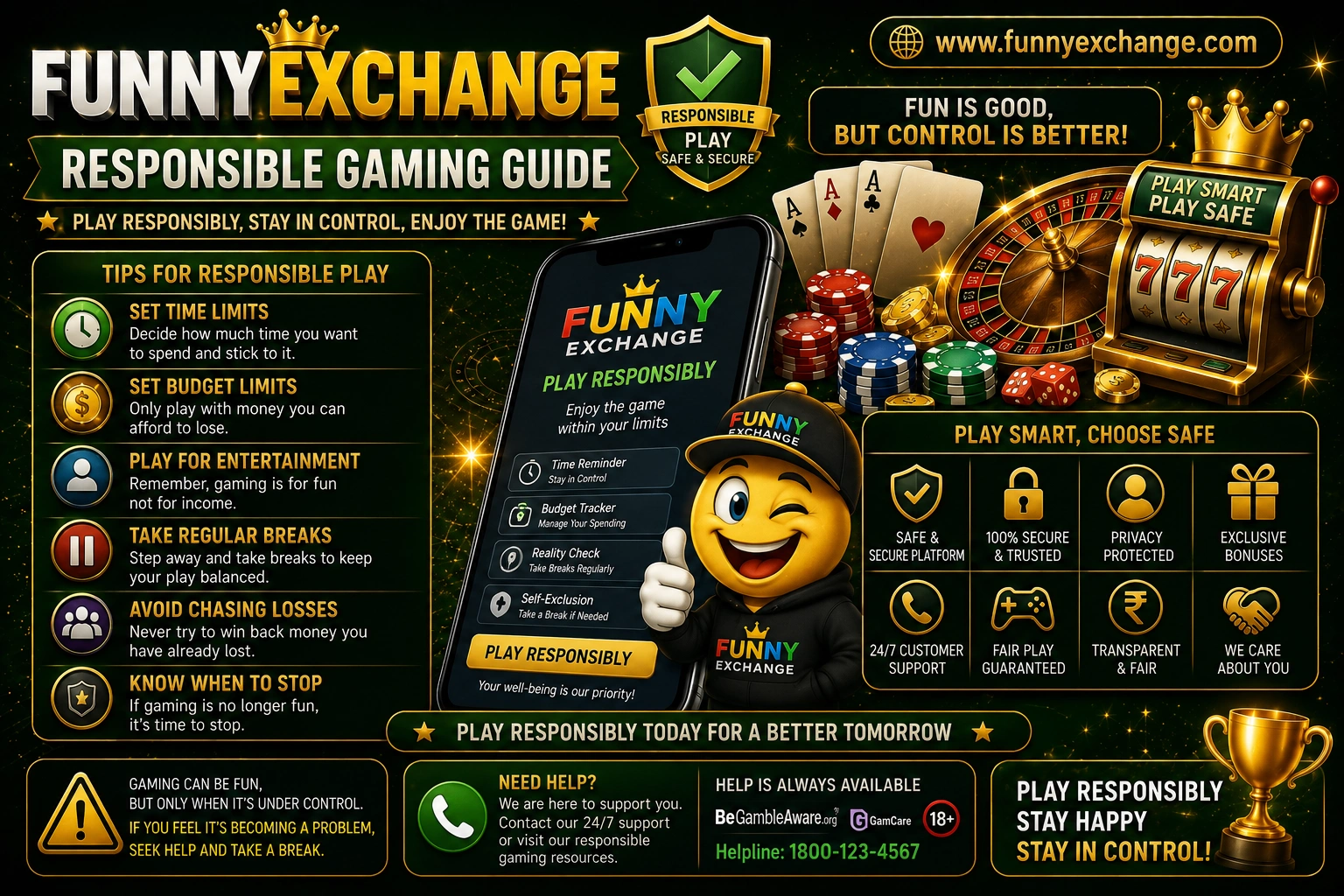
Funny Exchange Responsible Gaming Guide: Smart and Safer Play Tips
Online gaming and gambling platforms have become increasingly accessible through smartphones, computers, and other connected devices. While many people use these services as a form of entertainment, activities involving real money can also create financial and personal risks when they are not managed carefully. This is why responsible gaming is an important concept for every player, regardless of experience level.
Responsible gaming means understanding that gambling is entertainment rather than a guaranteed way to earn money. It involves setting realistic limits, keeping track of spending, understanding the possibility of losing, and knowing when to take a break. It also means recognizing warning signs that gambling may be becoming difficult to control.
What Is Responsible Gaming FunnyExchange?
Responsible gaming is the practice of participating in gambling activities in a controlled and informed way. It involves recognizing the risks associated with real-money games and making decisions within predetermined personal limits.
A responsible approach includes:
- Treating gambling as entertainment.
- Setting a fixed budget.
- Avoiding money needed for essential expenses.
- Taking regular breaks.
- Avoiding attempts to recover losses.
- Understanding that outcomes are uncertain.
- Knowing when to stop.
Responsible gaming does not mean finding a strategy that guarantees winning. No betting system can eliminate financial risk.
Why Responsible Gaming Matters
Gambling can be enjoyable for some people when approached within reasonable limits. However, spending more money or time than intended can create financial, emotional, and relationship problems.
Establishing boundaries before participating can help prevent impulsive decisions. A predefined budget provides a clear limit, while time restrictions can prevent extended sessions.
The most important principle is to remain in control of the activity rather than allowing gambling to control your decisions.
Set a Gambling Budget
One of the simplest responsible-gaming practices is creating a specific entertainment budget.
This should be money that you can afford to lose without affecting essential expenses such as:
- Rent or housing costs
- Food
- Utilities
- Education
- Medical expenses
- Debt payments
- Family responsibilities
Never use money reserved for necessities to fund gambling activity.
Once your entertainment budget has been reached, stop rather than adding additional funds.
Never Chase Losses
Chasing losses is one of the most important behaviors to avoid.
After losing money, some people increase their spending because they believe another wager will recover what they have lost. Unfortunately, this can result in even larger losses.
A better approach is to accept losses as part of the risk involved and respect the spending limit established beforehand.
Winning a future game is never guaranteed, regardless of previous results.
Understand That Outcomes Are Uncertain
Sports results and gambling outcomes cannot be predicted with certainty.
Even extensive research cannot guarantee a particular result. Teams can perform unexpectedly, players can become injured, weather conditions can change, and random events can influence outcomes.
Therefore, users should avoid statements or beliefs such as:
- “This result is guaranteed.”
- “I cannot lose this time.”
- “The next game must win.”
- “I have a winning system.”
Maintaining realistic expectations is an important part of responsible gaming.
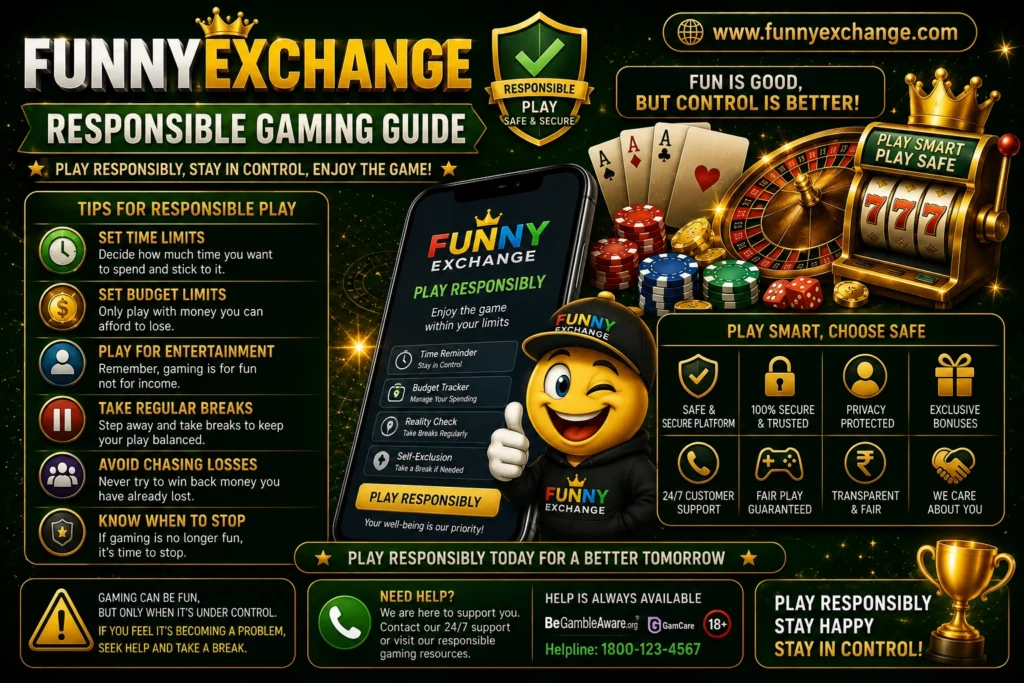
Set Time Limits Funnyexchange
Responsible gaming is not only about money. Time management is equally important.
Before starting a session, decide how much time you are comfortable spending. Consider using phone reminders or platform-based time-management tools if they are available.
Take regular breaks and avoid allowing gambling to interfere with:
- Work
- Education
- Sleep
- Exercise
- Family time
- Social responsibilities
If gambling consistently takes priority over important daily activities, it may be time to step away.
Avoid Gambling Under Emotional Stress
Emotions can strongly influence decision-making.
Avoid gambling when you are:
- Angry
- Extremely stressed
- Depressed
- Tired
- Intoxicated
- Trying to escape personal problems
Making financial decisions during intense emotional states can increase impulsive behavior.
It is better to take a break and return only when you feel calm and able to make decisions rationally.
Do Not Borrow Money for Gambling
Borrowing money to gamble increases financial risk.
Avoid using:
- Credit intended for essential expenses
- Loans
- Money borrowed from friends
- Money borrowed from family
- Emergency savings
Gambling should only involve discretionary funds that you can afford to lose.
Keep Track of Spending
Keeping records can provide a clearer picture of how much money is being spent.
A simple record can include:
- Date
- Amount deposited
- Amount withdrawn
- Amount spent
- Time spent playing
Reviewing these records regularly can help identify patterns that may otherwise go unnoticed.
Use Responsible-Gaming Tools
Many regulated platforms provide tools designed to help users maintain control.
Depending on the service and jurisdiction, these may include:
Deposit Limits
Users can establish maximum amounts that can be deposited within a specific period.
Time Limits
Some platforms allow users to set session or daily time limits.
Activity Statements
Account histories can help users monitor spending and activity.
Cooling-Off Periods
Temporary breaks can prevent continued participation when someone feels they need time away.
Self-Exclusion
Self-exclusion allows a person to restrict access to gambling services for a selected period or longer, depending on local rules.
These tools can be especially useful when combined with personal limits.
Protect Your Online Account
Account security is another important part of responsible online gaming.
Use a strong and unique password for your account. If two-factor authentication is available, consider enabling it.
Never share:
- Passwords
- One-time passwords
- PINs
- Authentication codes
- Banking credentials
Be cautious of messages claiming to represent customer support and requesting confidential information.
Recognize Warning Signs
Responsible gaming also involves recognizing when gambling may be becoming problematic.
Potential warning signs include:
- Spending more than originally planned.
- Frequently increasing the amount of money used.
- Trying repeatedly to recover losses.
- Hiding gambling activity from others.
- Borrowing money to continue.
- Neglecting work or studies.
- Missing family or social commitments.
- Thinking about gambling constantly.
- Feeling unable to stop.
- Experiencing stress because of gambling-related losses.
One warning sign does not automatically mean someone has a gambling disorder, but several signs together should be taken seriously.
Take a Break When Necessary
Taking a break is a healthy choice.
A break can last:
- Several hours
- A day
- A week
- Longer, depending on personal circumstances
During a break, consider spending time on other activities such as exercise, hobbies, family activities, or social events.
The purpose is to create distance and evaluate whether gambling remains an enjoyable and controlled activity.
Gambling Should Not Be an Income Strategy
One of the most important responsible-gaming principles is understanding that gambling is not a reliable method of earning income.
Results are uncertain, and losses can occur even when someone has extensive knowledge of a sport or game.
Essential financial goals should instead rely on reliable sources of income, budgeting, savings, and appropriate financial planning.
Avoid Betting Based on Emotions
Supporting a favorite team or player can make sporting events more exciting, but emotional loyalty can also affect decision-making.
For example, a fan may assume their favorite team will win despite unfavorable circumstances.
Responsible players should recognize that personal preferences do not change probabilities or guarantee outcomes.
Be Careful With Online Tips
The internet contains thousands of betting predictions, strategies, and supposed “guaranteed winning” systems.
Users should be skeptical of claims such as:
- Guaranteed profits
- 100% accurate predictions
- Risk-free betting
- Secret winning formulas
- Guaranteed recovery systems
No legitimate strategy can guarantee a particular sporting result.
Always evaluate online information critically.
Responsible Gaming for Beginners
New players should take additional care because unfamiliarity can lead to mistakes.
Beginners should:
- Learn the rules before spending money.
- Understand how odds and markets work.
- Set a budget before participating.
- Keep stakes within that budget.
- Avoid chasing losses.
- Take regular breaks.
- Monitor their activity.
- Learn about available responsible-gaming tools.
Learning first and spending later is generally a safer approach.
Responsible Gaming on Mobile Devices
Smartphones make gambling accessible almost everywhere, which can make time management more challenging.
Helpful practices include:
- Disable unnecessary notifications.
- Avoid gambling during work or study.
- Set application limits where appropriate.
- Keep payment information secure.
- Do not gamble late at night if it affects sleep.
- Avoid using gambling applications as a response to boredom.
Convenience should not remove personal boundaries.
What To Do If Gambling Becomes Difficult to Control
If someone feels unable to control their gambling, taking action early is important.
Possible steps include:
- Stop gambling temporarily.
- Use available self-exclusion or account-limit tools.
- Tell someone you trust.
- Review finances and outstanding debts.
- Seek professional advice.
- Contact a gambling-support organization available in your country.
Asking for help is a responsible decision, not a failure.
How Friends and Family Can Help
People close to someone experiencing gambling-related problems can provide valuable support.
Helpful approaches include:
- Listening without unnecessary judgment.
- Encouraging professional support.
- Helping establish financial boundaries.
- Avoiding lending money for gambling.
- Supporting healthy alternative activities.
It is important for family members to protect their own financial and emotional wellbeing as well.
Responsible Gaming Checklist
Before participating, ask yourself:
- Can I afford the money I plan to spend?
- Have I established a clear limit?
- Am I comfortable losing the entire amount?
- Have I set a time limit?
- Am I participating for entertainment?
- Am I calm and making rational decisions?
- Am I avoiding attempts to recover previous losses?
If the answer to any of these questions is no, consider taking a break.
Frequently Asked Questions
What does responsible gaming mean?
Responsible gaming means participating within personal financial and time limits while understanding that gambling involves risk.
Can responsible gaming guarantee that I will not lose money?
No. Responsible gaming does not eliminate financial risk. It focuses on controlling how much money and time you are willing to risk.
What is chasing losses?
Chasing losses means increasing gambling activity in an attempt to recover money that has already been lost. It is an important behavior to avoid.
Should I gamble with borrowed money?
No. Gambling with borrowed money can increase financial problems and should be avoided.
What should I do if I cannot stop gambling?
Take a break, use available restriction or self-exclusion tools, and seek support from a qualified professional or gambling-support organization in your region.
Is gambling a reliable way to make money?
No. Gambling outcomes are uncertain, and gambling should not be treated as a dependable source of income.
Conclusion
Responsible gaming is ultimately about maintaining control. People who choose to participate in real-money gaming should understand that losses are possible and that no strategy can guarantee success.
Setting clear financial and time limits, avoiding borrowed money, refusing to chase losses, protecting account information, and taking regular breaks are practical ways to reduce unnecessary risks. It is equally important to recognize warning signs and seek support if gambling begins affecting finances, relationships, work, education, or personal wellbeing.
The healthiest approach is to treat gambling as optional entertainment rather than a financial necessity. If it stops being enjoyable or begins creating problems, stepping away is always a responsible choice.
By understanding the risks and using appropriate limits, users can make more informed decisions and maintain healthier boundaries around online gaming and gambling activities.
Join Funny Exchange Today
Explore exciting casino games, live entertainment and premium gaming experiences.